

Hey there! I'm a supplier of Medical Air Cargo Shower Rooms, and today I wanna chat about how these awesome rooms protect against chemical contamination.
First off, let's understand why protecting against chemical contamination in the medical air cargo area is so crucial. Medical supplies, drugs, and equipment are super sensitive. Even a tiny bit of chemical contamination can mess up their quality, effectiveness, and safety. So, having proper protection is a must.
How Medical Air Cargo Shower Rooms Work
Air Filtration System
One of the key features of a Medical Air Cargo Shower Room is its air filtration system. This system is like a super - efficient cleaner for the air. It uses high - efficiency particulate air (HEPA) filters. These filters are so good that they can trap particles as small as 0.3 microns with an efficiency of over 99.97%. Chemical contaminants often come in the form of tiny particles, like dust, fumes, or aerosols. The HEPA filters catch these tiny chemical - laden particles, preventing them from getting into the cargo area.
Let's say there are some chemical fumes from a nearby manufacturing process that could potentially contaminate the medical cargo. The air intake of the shower room sucks in this contaminated air. As the air passes through the HEPA filters, the chemical particles get stuck, and only clean air is allowed to circulate inside the room. This way, the medical cargo is kept safe from these harmful chemicals.
Airflow Control
Another important aspect is the airflow control. The Medical Air Cargo Shower Room is designed to have a specific airflow pattern. Usually, the air flows from the cleanest areas to the less clean areas. This is called unidirectional airflow. In a well - designed shower room, the air enters from the top and exits from the bottom.
This airflow pattern serves two main purposes when it comes to chemical contamination. First, it helps to quickly remove any chemical contaminants that might be present in the room. If there are some droplets of a chemical agent that got into the room, the unidirectional airflow will carry them out of the room before they can settle on the medical cargo. Second, it creates a barrier of clean air around the cargo. This prevents external contaminated air from getting close to the cargo, providing an extra layer of protection.
Secondary Protective Mechanisms
Pressurization
Medical Air Cargo Shower Rooms are often pressurized. The pressure inside the room is kept higher than the pressure outside. This is known as positive pressure. When there's a positive pressure difference, air will always flow from the inside of the room to the outside.
What does this mean for chemical contamination? Well, if there are any chemical leaks or contaminants outside the room, the positive pressure inside the room will prevent them from seeping in. It's like having a force that pushes the bad stuff away. For example, if there's a chemical spill in the adjacent corridor, the positive pressure in the shower room will ensure that the chemical fumes don't make their way into the room and contaminate the medical cargo.
Surface Materials
The materials used to construct the shower room also play a role in protecting against chemical contamination. The walls, floors, and ceilings are made of materials that are resistant to chemicals. For instance, some rooms use stainless steel or special coated panels.
These materials are non - porous, which means that chemicals can't soak into them. If a chemical accidentally spills on the surface, it can be easily cleaned off. This prevents the chemicals from lingering in the room and potentially causing contamination. Moreover, these materials are also easy to disinfect, which helps to maintain a clean and contaminant - free environment for the medical cargo.
Comparison with Other Medical Purification Equipment
Now, it's worth comparing the Medical Air Cargo Shower Room with other related medical purification equipment, such as the Medical Aseptic Transfer Chamber, Medical Weighing Room, and Medical Clean Room.
The Medical Aseptic Transfer Chamber is mainly used for transferring medical items in a sterile environment. While it also has some protection against contamination, its focus is more on maintaining aseptic conditions for item transfer. The Medical Weighing Room is designed for accurately weighing medical substances. It has strict control over dust and particle contamination but might not be as specialized in dealing with a wide range of chemical contaminants as the Medical Air Cargo Shower Room.
The Medical Clean Room, on the other hand, is a large - scale facility for various medical processes. It also has air filtration and contamination control measures, but the Medical Air Cargo Shower Room is more targeted at protecting medical cargo during the loading and unloading process. Each of these pieces of equipment has its own unique functions, but when it comes to protecting medical air cargo from chemical contamination, the shower room stands out.
In - Depth Features for Chemical Protection
Gas - Phase Filtration
Some advanced Medical Air Cargo Shower Rooms are equipped with gas - phase filtration. While HEPA filters are great for particulate matter, gas - phase filters are designed to remove gaseous chemical contaminants. These filters use activated carbon or other adsorbent materials to trap chemicals like volatile organic compounds (VOCs), ammonia, and sulfur dioxide.

For example, if there are some VOCs in the air due to the use of solvents in the nearby storage area, the gas - phase filters in the shower room will adsorb these chemicals. This ensures that the air inside the room is not only free of particles but also of harmful gases, providing comprehensive protection for the medical cargo.
Monitoring and Alarm Systems
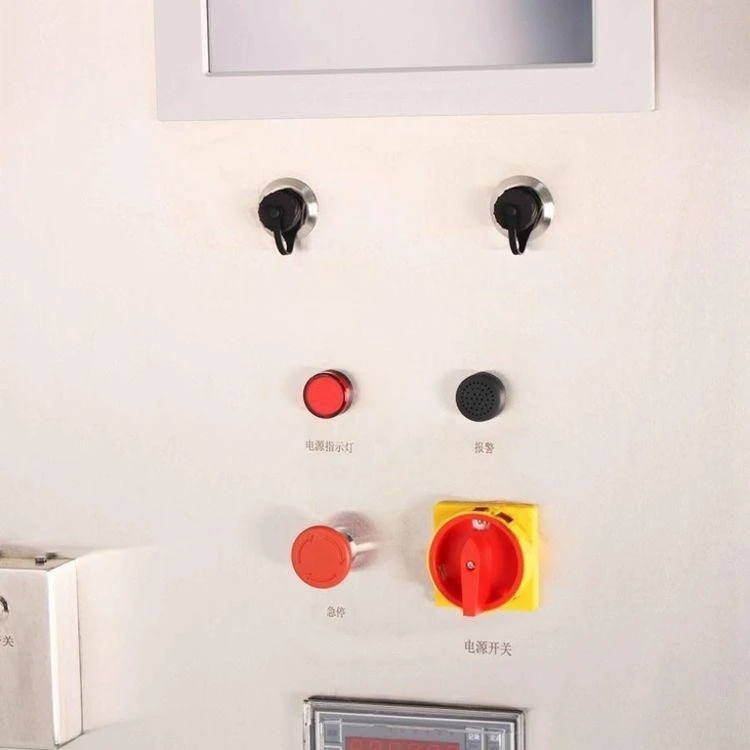
To ensure continuous protection against chemical contamination, many Medical Air Cargo Shower Rooms are equipped with monitoring and alarm systems. These systems constantly measure the levels of various chemicals in the air. If the concentration of a particular chemical exceeds a pre - set limit, an alarm will go off.
This allows the operators to take immediate action, such as increasing the airflow, activating additional filtration systems, or evacuating the area if necessary. The monitoring systems can detect a wide range of chemicals, giving an early warning of potential contamination and preventing any damage to the medical cargo.
Why Choose Our Medical Air Cargo Shower Rooms
We, as a supplier, are committed to providing the best - in - class Medical Air Cargo Shower Rooms. Our rooms are designed and built with the latest technology and strict quality control. We use only high - quality materials for construction, ensuring long - term durability and chemical resistance.
Our air filtration systems are top - notch, with both HEPA and gas - phase filters that can effectively remove a wide range of chemical contaminants. The airflow control and pressurization systems are carefully calibrated to provide the best protection for your medical cargo.
We also offer customized solutions. Every medical air cargo operation is different, and we understand that. So, we can tailor our shower rooms to meet your specific needs, whether it's the size of the room, the level of filtration required, or the integration with other systems in your facility.
Conclusion
In conclusion, a Medical Air Cargo Shower Room is an essential piece of equipment for protecting medical cargo against chemical contamination. Through its air filtration, airflow control, pressurization, surface materials, and other advanced features, it creates a safe and clean environment for the storage and transfer of medical supplies.
Compared with other medical purification equipment, it offers unique advantages for protecting air cargo. If you're in the medical air cargo business and are looking for a reliable solution to protect your cargo from chemical contamination, our Medical Air Cargo Shower Rooms are the way to go. Don't hesitate to reach out to us for more information and to discuss your procurement needs. We're here to help you keep your medical cargo safe and sound.
References
- "Handbook of Air Cleaning Technology", John Wiley & Sons
- "Principles of Medical Equipment Contamination Control", Elsevier